Friday, October 30 at Fiske Planetarium and Sommers-Bausch Observatory, Boulder
Fiske Planetarium and Sommers-Bausch Observatory · University of Colorado $12
About this event
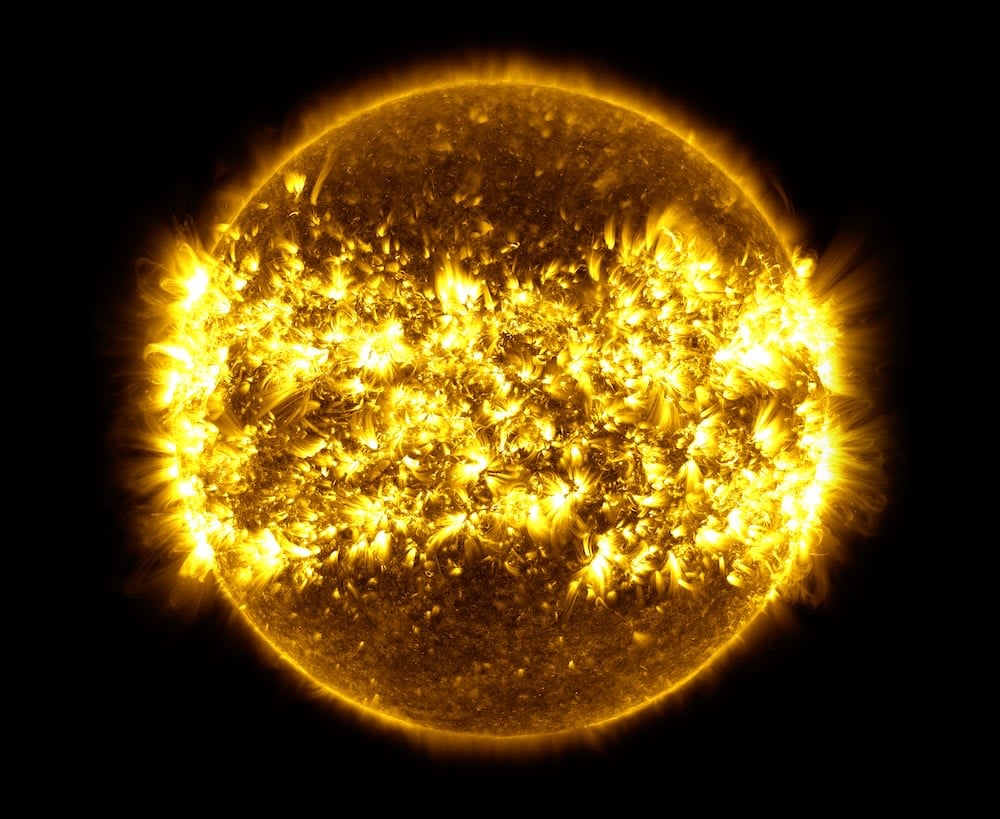
Our star, the Sun, brings light and life to the Earth. The Sun is not a boring star --- its surface is covered with magnetic fields, generated in the interior, that come and go over 11-year cycles of solar activity. We have studied the Sun for more than 400 years, and questions about the origins of solar magnetism remain amongst the most important in all of classical physics. The history studying this solar activity has deep ties in Colorado, and was central to Boulder becoming a world-renowned center of scientific research. Join Professor Ben Brown to learn how we know what we know about the Sun, from early telescope observations in the mountains of Colorado to cutting edge studies of the Sun from space and from the peak of Haleakalā on Maui. We will also learn what computer simulations and solar theory reveal below the Sun's surface, and how our full picture of our star the Sun is changing and evolving. Dr. Ben Brown is a professor in the Department of Astrophysical and Planetary Sciences here at University of Colorado, Boulder. Dr. Brown did his PhD studies at CU Boulder, exploring the dynamo physics that build the solar magnetic field. He spent time at University of Wisconsin and University of California Santa Barbara before returning to CU Boulder as a faculty member. He loves exploring fluid dynamics in our Sun and in planetary atmospheres, is passionate about helping communities adapt to climate change, and loves exploring our world.
Who's playing
Dr. Ben Brown is a professor in CU Boulder's Department of Astrophysical and Planetary Sciences. He did his PhD here on the dynamo physics that builds the Sun's magnetic field. He worked at the University of Wisconsin and UC Santa Barbara, then came back to CU as faculty. He also studies fluid dynamics in the Sun and in planetary atmospheres.
What to expect
The talk moves from early telescope observations in the Colorado mountains to current studies of the Sun from space and from the peak of Haleakalā on Maui. It also covers what computer simulations and solar theory show beneath the Sun's surface. It is part of Fiske's live faculty talk series, which runs about an hour including questions. Fiske has a 65-foot dome, the largest planetarium between Chicago and Los Angeles. Talks may use bright lights, loud sounds or motion effects.
Why go
The Sun's 11-year activity cycle and the origins of its magnetism are still open questions in physics. You hear about them from someone who has worked on them since graduate school, in the town where much of that science happened. It is a good evening out for anyone curious about the star overhead, and no background in astronomy is needed.
Where
Fiske Planetarium and Sommers-Bausch Observatory · 2414 Regent Drive · University of Colorado, Boulder CODirections